16th April 2026
This communication is for informational purposes only and does not constitute financial, legal, or professional advice. ACCR does not hold an Australian Financial Services Licence and does not provide financial product advice. The purpose of this communication is not to provide financial product advice. Please read the terms and conditions attached to the use of this site.
Dr Sophie Lewis, ACCR Chief Scientist - Engagement
The oceans are doing some seriously heavy lifting for our climate.
For the first time, the World Meteorological Organization (WMO) included analysis on Earth’s energy imbalance in its State of the Global Climate 2025.
The new indicator reflects the difference between the amount of energy entering and leaving our atmosphere.
It offers another warning of the strain rising emissions are putting on our climate system.
In a stable climate, the ingoing and outgoing energy is roughly the same. But now, increasing carbon dioxide, methane and nitrous oxide emissions – which are at their highest levels in at least 800,000 years – are restricting the amount of heat that can leave the atmosphere.
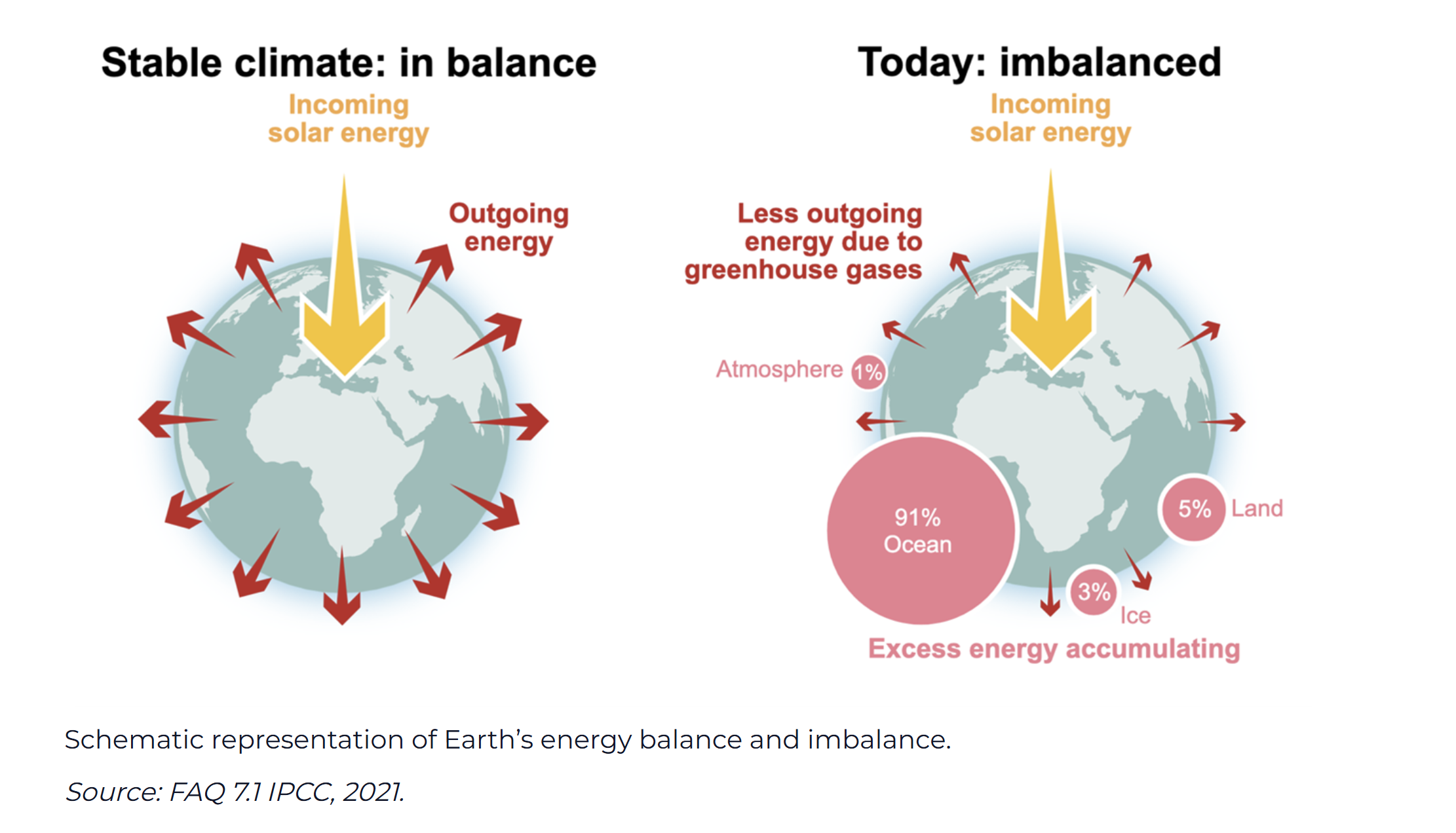
Most of the excess heat trapped by emissions is absorbed by the oceans. Image by WMO.
The buildup of surplus energy, known as a positive energy imbalance, is causing the climate to warm.
Last year, global temperatures reached 1.43°C above the 1850-1900 average. But if it wasn’t for the oceans, that number would be much higher.
The oceans absorb around 91% of the excess heat trapped in our climate. Most of the remaining heat is absorbed by land and ice, with only a small amount directly warming the atmosphere.
According to the WMO, the ocean’s heat content is currently increasing at a rate roughly 18 times annual human use – about 11.0-12.2 zettajoules.
The storing of heat in the oceans is shielding us from worse impacts of climate change, but it is coming at a cost.
Last October, the Global Tipping Points report declared the tipping point for coral reefs had been crossed.
Coral reefs are highly sensitive to heat. Even short periods of high ocean temperatures can trigger bleaching, and ongoing stress prevents recovery, making losses irreversible. Around one billion people globally rely on coral reefs for food and fishing-derived income.
Hotter seas are also fueling more dangerous storms. Typhoon Sinlaku became the strongest storm of the year on Sunday, with wind speeds reaching 280 km/h, making it a Category 5 storm. As ocean and atmospheric temperatures rise, more tropical cyclones (also known as typhoons and hurricanes depending on where in the world they occur) are expected to reach this highly destructive level.
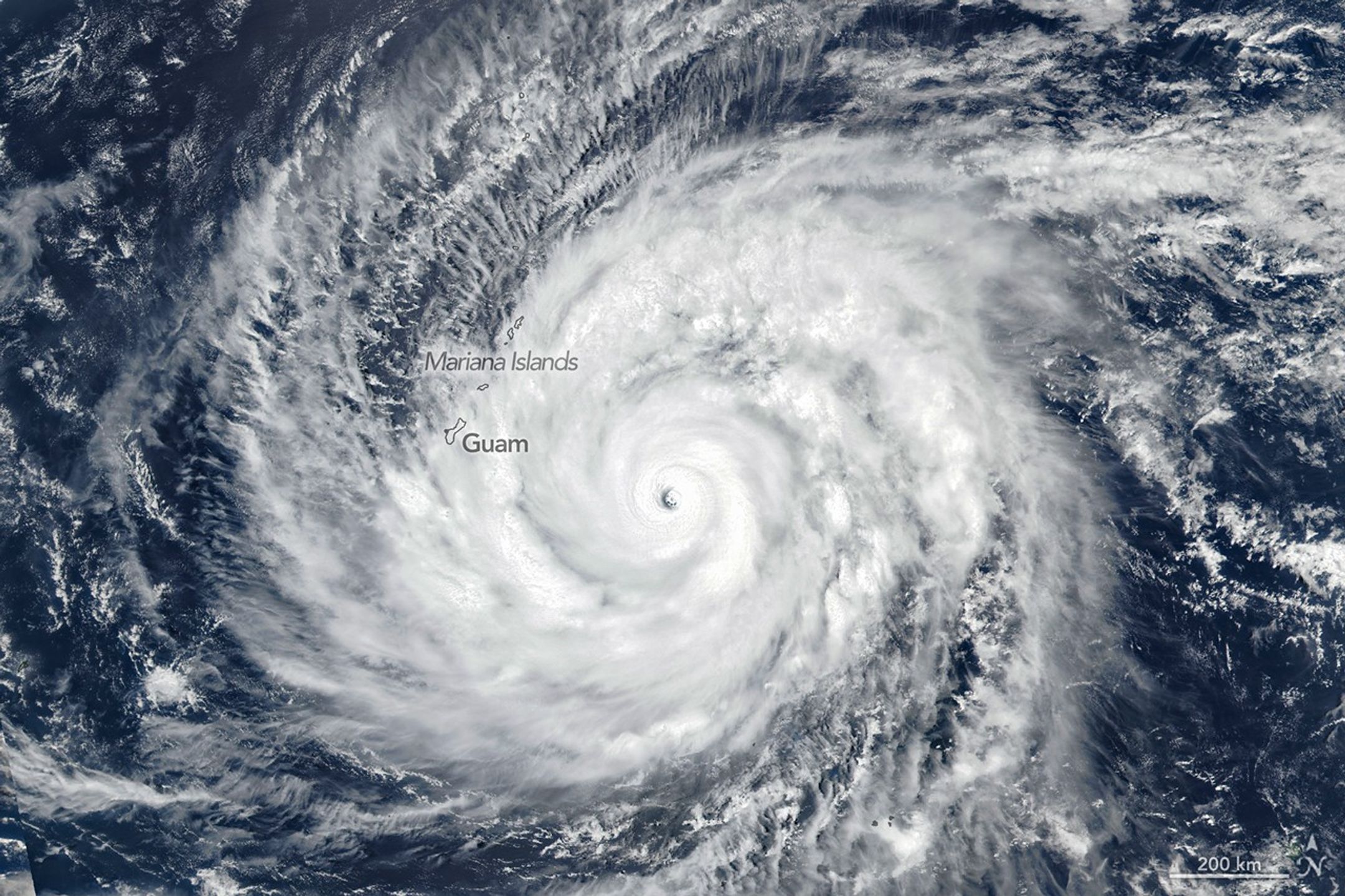
Typhoon Sinlaku over the North Pacific Ocean on April 13. Image by NASA Earth Observatory.
The WMO report warns that Earth’s energy imbalance has increased since monitoring began in 1960, particularly over the past two decades.
Even with the heat-buffering effect of the oceans, climate impacts are intensifying in every region of the world, affecting millions of people and causing billions of dollars in economic losses.
Like the other climate change indicators in the WMO report – including temperature and sea ice extent – a record high energy imbalance is a reminder that global emissions are still rising.
And with every fraction of a degree of future warming, climate impacts will challenge the resilience of natural systems and cascade through economies.